The washing machine is now one of the vital appliances found in homes, laundries, hotels, hospitals, garments factories, and commercial establishments. Learning about the workings of washing machine allows a person to be more efficient, save energy and extend the life of the appliance. Regardless of whether you are an individual user or the owner of a laundry shop or any other business, knowing how washing machine works allows you to choose the right cycle and maintain the machine. Here is an in-depth guide to how washing machines work by S.R. Sons Garments Equipment in clear and professional language.
Many individuals use a washing machine everyday but have no idea about the principle and technology of washing machine. From structure and inner components to wash cycles, water circulation, spinning, safety and maintenance tips, the guide has covered everything. So if you are looking for how does washing machine work, how to use washing machine or a detailed washing machine in hindi guide, then read on below with information up to date till 2026.
What is a Washing Machine and Why is It Important?
The washing machine is an electric machine which helps in automatic cleaning of the clothes using water, detergents, movement and spinning. The aim of such cleaning is to get rid of dirt, marks, sweat, germs and odor without affecting the quality of fabrics. In modern washing machines, intelligent sensors are used in order to clean effectively by using minimal amount of water and electricity.
It is important to know about the functioning of the washing machine in order to prevent from the usual mistakes which will affect both clothes and the working of the machine. Experts of S.R. Sons Garments Equipment advise to have basic knowledge of how the washing machine works before using it.
Evolution of Washing Machines
Earlier washing machines required manual operation, but today’s models feature automatic controls, digital displays, inverter motors, AI-assisted wash programs, steam cleaning, and smart connectivity. The working principle of washing machine has also improved significantly through technological advancements that increase cleaning efficiency while reducing operating costs.
Types of Washing Machines
Modern washing machines are available in several configurations:
- Fully Automatic Top Load
- Fully Automatic Front Load
- Semi-Automatic Washing Machine
- Twin Tub Washing Machine
- Industrial Washing Machine
- Commercial Laundry Washer
- High-Capacity Garment Washing Machine
Each machine follows the same basic working principle of washing machine, although the design, capacity, and automation level differ according to application.
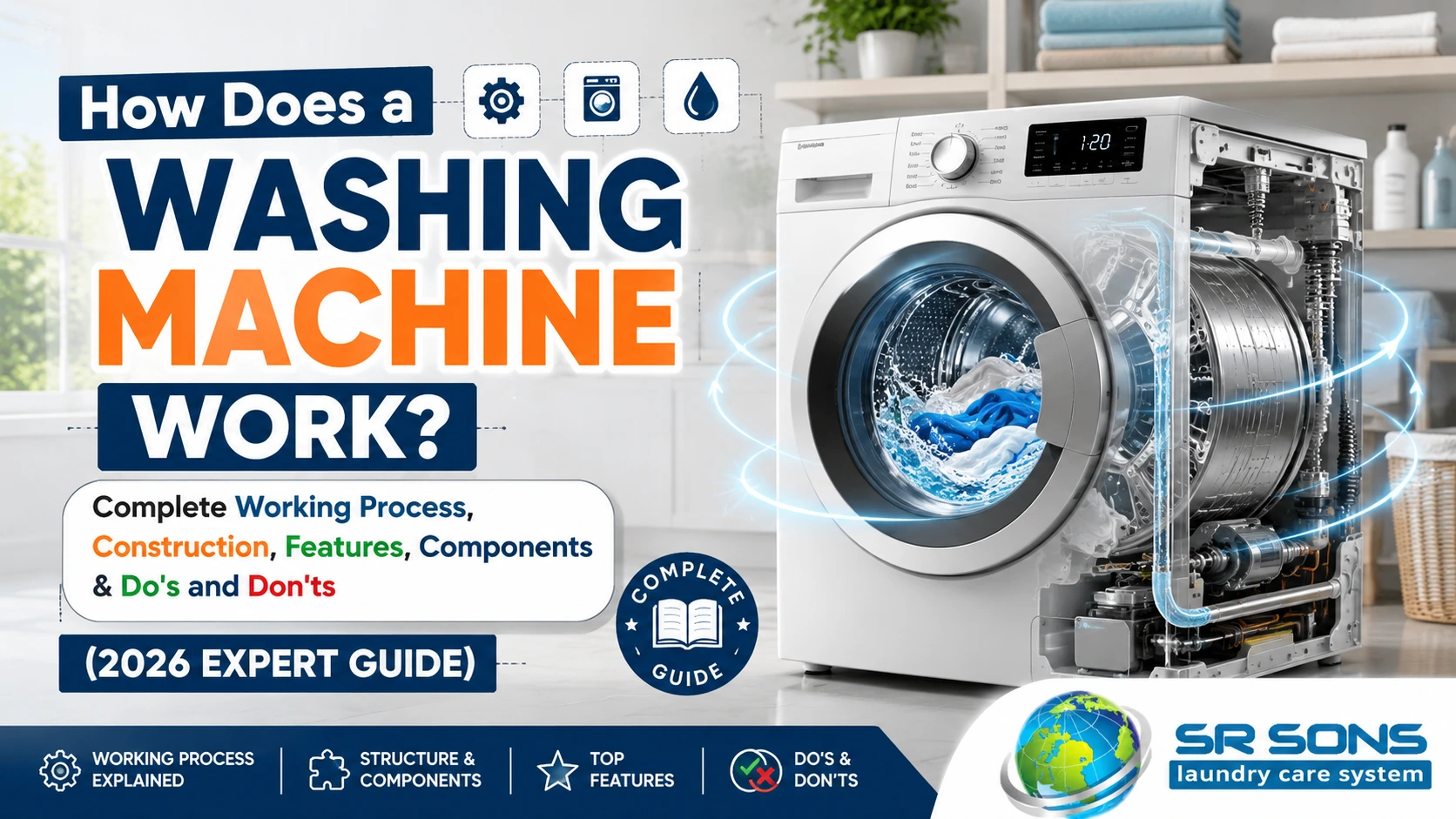
Construction of a Washing Machine
The construction of a washing machine is carefully engineered so that every component works together during the washing process. A well-designed machine improves washing quality, minimizes vibration, and enhances operational safety.
Every user who wants to understand how washing machine works should first become familiar with its construction. The internal structure determines cleaning performance, durability, and maintenance requirements.
Outer Cabinet
The cabinet protects all internal components from dust, moisture, and external damage. It also provides structural strength and stability during high-speed spinning.
Inner Drum
The drum holds clothes during washing. Small perforations allow water to circulate while preventing fabric damage. Drum design directly influences the working of washing machine by improving water movement and detergent distribution.
Electric Motor
The motor rotates the drum during wash and spin cycles. Modern inverter motors provide higher efficiency, quieter operation, and longer service life.
Water Inlet Valve
The inlet valve controls water entry into the machine according to the selected program. Automatic sensors regulate the required water level.
Drain Pump
The drain pump removes dirty water after every wash and rinse cycle. Efficient drainage is essential for proper washing machine use and hygienic washing.
Heating Element
Front-load machines often include heating elements that warm the water for improved stain removal and better detergent performance.
Control Panel
The control panel allows users to select different wash programs, temperature settings, rinse cycles, and washing machine setting options according to fabric type.
Suspension System
Shock absorbers and suspension springs reduce vibration during high-speed spinning, ensuring smooth and stable operation.
Working Principle of a Washing Machine
Many people ask, “What is the working principle of washing machine?” The answer lies in the combination of mechanical action, detergent chemistry, water circulation, and centrifugal force.
The washing machine works on the principle of agitation, friction, detergent action, and centrifugal separation. These processes work together to clean clothes efficiently while protecting the fabric from excessive wear.
Step 1: Water Filling
Once the wash cycle begins, the inlet valve opens automatically and fills the drum with the required amount of water. Advanced machines use sensors to determine the correct water level based on the load size.
Step 2: Detergent Mixing
The detergent dissolves in water to create a cleaning solution that penetrates deep into fabric fibers. This solution loosens dirt, grease, oils, and stains.
Step 3: Drum Rotation
The motor rotates the drum in alternating directions. This tumbling action creates friction between clothes, allowing detergent to remove dirt effectively. This stage is one of the most important parts of the working of washing machine.
Step 4: Soaking Process
Some wash programs include soaking to loosen stubborn stains before the main wash cycle begins.
Step 5: Washing Cycle
The drum continues rotating while detergent breaks down contaminants. Proper drum movement explains how washing machine works efficiently without damaging garments.
Step 6: Dirty Water Drainage
After washing, the drain pump removes dirty water from the drum before fresh water enters for rinsing.
Step 7: Rinsing
Clean water removes detergent residue from clothes, ensuring soft and fresh garments.
Step 8: High-Speed Spin
The drum rotates at very high speed, generating centrifugal force that extracts excess water from clothes. This demonstrates why the washing machine works on the principle of centrifugal force during spinning.
Major Components Responsible for Washing Performance
Every component plays a unique role in improving cleaning efficiency. Even a small malfunction can affect the complete working of washing machine.
Professionals at S.R. Sons Garments Equipment recommend understanding these parts because proper maintenance significantly increases machine life and reduces repair costs.
Drum
The drum provides continuous movement for clothes during washing and spinning.
Motor
The motor generates rotational power for washing and high-speed spinning.
Water Pump
The pump circulates and drains water throughout the washing process.
Sensors
Modern machines include load sensors, water level sensors, foam sensors, temperature sensors, and vibration sensors.
Electronic Control Board
This functions as the brain of the appliance by controlling every operation automatically.
Belt and Pulley
These components transfer motor power to the drum in conventional washing machines.
Bearings
Bearings reduce friction and allow smooth drum rotation.
Door Lock System
Safety locks prevent accidental opening during operation.
Water Level Sensor
This component ensures the correct amount of water enters according to the selected washing machine setting.
Understanding How to Use Washing Machine Correctly for Maximum Performance
Many people buy a new washing machine, yet they do not know how to operate it and benefit from it in the best possible way since they do not have proper knowledge of how to use washing machine. A washing machine can give good washing effect only when you load your clothes properly, put the right amount of detergent and choose the right wash cycle. It may be very easy to learn how to use washing machine, but it can bring huge difference in terms of the result of washing, electricity usage and the durability of the machine.
According to the specialists from S.R. Sons Garments Equipment, every user should know the principle of washing machine operation prior to using it. If you understand how washing machine works, it will be much easier for you to choose the right program, and you will not damage your clothes as well as wash stains off perfectly.
How to Use Washing Machine Step by Step
If you are searching for how to use washing machine step by step, follow this complete guide carefully.
Step 1: Sort Your Clothes
Separate clothes according to:
- White garments
- Colored garments
- Delicate fabrics
- Heavy fabrics
- Woollen clothes
- Bedsheets and blankets
- Industrial uniforms
Sorting clothes is one of the simplest yet most effective ways to improve the working of washing machine while protecting fabric quality.
Step 2: Check Pockets
Always inspect every pocket before washing.
Remove:
- Coins
- Mobile phones
- Keys
- Pens
- Nails
- Paper
- Earphones
Foreign objects may damage the drum and interfere with how washing machine works internally.
Step 3: Load Clothes Properly
Never overload the drum.
Overloading can:
- Reduce cleaning efficiency
- Increase motor load
- Create excessive vibration
- Damage suspension springs
- Affect spinning performance
Proper loading ensures the best washing machine use.
Step 4: Add Detergent
Choose detergent according to machine type.
Use:
- Front-load detergent
- Top-load detergent
- Liquid detergent
- Fabric conditioner when required
Too much detergent creates foam, while too little detergent reduces cleaning quality.
Step 5: Select the Correct Washing Machine Setting
Choosing the proper washing machine setting is one of the most important parts of machine operation.
Modern machines usually include:
- Quick Wash
- Daily Wash
- Cotton
- Synthetic
- Delicate
- Wool
- Jeans
- Baby Care
- Steam Wash
- Eco Mode
- Heavy Duty
Understanding each washing machine setting helps achieve better cleaning while saving water and electricity.
Step 6: Start the Wash Cycle
Press Start after selecting:
- Water temperature
- Spin speed
- Wash program
- Rinse option
The machine automatically begins the cleaning cycle according to the selected program.
Step 7: Remove Clothes Immediately
After the cycle finishes, remove clothes promptly.
Leaving wet clothes inside the drum may cause:
- Bad odor
- Mold formation
- Bacterial growth
- Wrinkles
This is an important part of washing machine how to use properly.
Different Washing Machine Settings Explained
Many users become confused when they see multiple options on the display. Every washing machine setting is designed for a specific fabric type.
Cotton Mode
Suitable for:
- Shirts
- Bedsheets
- Towels
- Cotton trousers
This cycle generally uses longer washing time for better cleaning.
Synthetic Mode
Designed for polyester, rayon, and blended fabrics.
It protects fibers while maintaining effective cleaning.
Delicate Mode
Perfect for:
- Silk
- Lace
- Soft garments
- Designer clothes
This mode uses gentle drum movement.
Wool Mode
Uses slower drum rotation to protect wool fibers.
Eco Mode
Eco Mode reduces:
- Water consumption
- Electricity usage
- Detergent consumption
Modern machines optimize the working principle of washing machine in Eco Mode for maximum efficiency.
Quick Wash
Useful when clothes are lightly soiled.
The cycle usually finishes within 15–30 minutes.
Heavy Duty Mode
Designed for:
- Industrial uniforms
- Curtains
- Thick blankets
- Workwear
Heavy-duty cycles demonstrate how washing machine works efficiently under higher loads.
Features of Modern Washing Machines
Today’s washing machines are equipped with advanced technologies that improve cleaning quality and user convenience.
AI Smart Wash
Automatically detects:
- Fabric type
- Load weight
- Water requirement
- Washing duration
This technology optimizes the working principle of washing machine.
Inverter Motor
Benefits include:
- Low electricity consumption
- Quiet operation
- Longer lifespan
- Better speed control
Steam Wash
Steam removes:
- Germs
- Allergens
- Odor
- Stubborn stains
Child Lock
Prevents accidental operation during washing.
Auto Restart
The machine resumes operation automatically after power restoration.
Digital Display
Shows:
- Remaining time
- Selected washing machine setting
- Error codes
- Water temperature
- Spin speed
Benefits of Using a Washing Machine
Proper washing machine use offers several advantages.
Saves Time
Automatic washing reduces manual effort significantly.
Saves Water
Modern machines consume much less water than hand washing.
Better Cleaning
Consistent drum movement provides excellent stain removal.
Fabric Protection
Correct wash cycles reduce fabric damage.
Hygienic Washing
Hot water and steam remove bacteria effectively.
Energy Efficient
Advanced motors consume less electricity.
Commercial Productivity
Industrial washing machines increase laundry output and operational efficiency.
According to experts at S.R. Sons Garments Equipment, understanding how to use washing machine, selecting the correct washing machine setting, and knowing how washing machine works can improve both cleaning performance and machine durability.
Maintenance Tips to Improve Washing Machine Performance
Maintenance is extremely important for keeping the washing machine functional and running for a longer time period. A lot of times, problems arise with washing machines not due to any fault in the machine itself but because the user does not bother with proper cleaning and servicing of the machine. Properly maintained machines work more efficiently, consume less power, cost less in repairs, and continue to run smoothly for a long time.
The experts at S.R. Sons Garments Equipment emphasize the importance of preventative maintenance rather than corrective maintenance. Understanding the functioning of a washing machine makes its maintenance easier.
Clean the Drum Regularly
The drum accumulates detergent residue, lint, bacteria, and mineral deposits over time. Run an empty hot-water cleaning cycle once every month using a recommended drum cleaner or white vinegar to keep the interior hygienic and maintain the working principle of washing machine.
Clean the Detergent Drawer
Remove the detergent tray regularly and wash away detergent buildup. A blocked drawer may reduce detergent flow and affect washing quality.
Inspect the Water Inlet Filter
The inlet filter prevents dirt and sand from entering the machine. Clean it periodically to maintain proper water pressure and improve washing machine use.
Clean the Drain Pump Filter
Coins, buttons, hair, and lint often collect inside the drain filter. Cleaning it every few weeks prevents drainage problems and keeps how washing machine works efficiently.
Keep the Door Open After Washing
Leave the door slightly open after each wash cycle to allow moisture to evaporate. This prevents mold, mildew, and unpleasant odors.
Check Hoses Regularly
Inspect water inlet and outlet hoses for cracks, leaks, or blockages. Replacing damaged hoses on time avoids unexpected failures.
Level the Machine Properly
An uneven installation causes excessive vibration during spinning. Proper leveling protects bearings, suspension springs, and the motor while improving the working of washing machine.
Common Washing Machine Problems and Their Solutions
Even advanced machines may occasionally develop operational issues. Understanding the basics of troubleshooting helps users identify simple problems before calling a technician.
Machine Does Not Start
Possible reasons include:
- No power supply
- Door not locked properly
- Child lock enabled
- Faulty power cable
- Damaged control board
Always verify the basic electrical supply before assuming a major fault.
Machine Does Not Fill with Water
Possible causes:
- Closed water tap
- Blocked inlet filter
- Low water pressure
- Faulty inlet valve
Proper water supply is necessary because washing machine works on the principle of controlled water circulation throughout the wash cycle.
Drum Does Not Rotate
Possible reasons:
- Worn drive belt
- Motor malfunction
- Faulty capacitor
- Control board issue
A stationary drum directly affects the working principle of washing machine and prevents effective cleaning.
Excessive Vibration
Common causes include:
- Uneven flooring
- Overloading
- Unbalanced clothes
- Damaged suspension system
Correct loading improves washing machine use and reduces unnecessary vibration.
Water Leakage
Check:
- Drain hose
- Door gasket
- Water inlet hose
- Pump connections
Timely inspection prevents expensive repairs.
Clothes Remain Wet After Spinning
Possible reasons:
- Overloaded drum
- Incorrect washing machine setting
- Low spin speed
- Blocked drain pump
Selecting the correct washing machine setting ensures efficient water extraction during the spin cycle.
Do’s for Safe Washing Machine Operation
Following good operating practices improves both cleaning performance and machine life.
Always Sort Clothes
Separate clothes according to color, fabric, and washing requirements.
Read Garment Care Labels
Follow the manufacturer’s washing instructions before selecting a wash program.
Use the Correct Detergent
Always choose detergent suitable for your machine type.
Follow Recommended Load Capacity
Do not exceed the machine’s rated capacity.
Select the Right Program
Choosing the proper washing machine setting protects delicate garments and improves cleaning efficiency.
Clean Filters Frequently
Routine cleaning keeps the working of washing machine working smoothly and efficiently.
Schedule Periodic Servicing
Professional inspection helps detect problems before they become expensive repairs.
Don’ts That Every User Should Avoid
Many machine failures result from improper usage rather than mechanical defects.
Never Overload the Drum
Overloading stresses the motor and suspension system.
Never Use Excessive Detergent
Too much detergent creates excessive foam and reduces washing efficiency.
Never Slam the Door
Always close the door gently to protect the locking mechanism.
Never Wash Restricted Items
Avoid washing:
- Shoes (unless supported)
- Heavy carpets
- Rubber products
- Sharp metal objects
Never Ignore Strange Noises
Unusual sounds often indicate developing mechanical problems.
Never Disconnect Power During Operation
Interrupting a wash cycle may affect the electronic control system.
Understanding washing machine how to use properly helps avoid these common mistakes.
Industrial and Commercial Applications
Although domestic washing machines are common in homes, industrial machines are designed for continuous heavy-duty operation.
Industrial washing systems supplied by S.R. Sons Garments Equipment are widely used in:
- Garment manufacturing units
- Commercial laundries
- Hotels
- Hospitals
- Textile processing industries
- Dry cleaning businesses
- Uniform rental companies
- Healthcare facilities
- Educational institutions
- Hospitality sector
Industrial machines follow the same working principle of washing machine, but they offer larger capacities, stronger construction, faster wash cycles, and higher productivity.
Why Understanding the Working Process Matters
Many users focus only on operating the machine without understanding how washing machine works internally. Learning the complete process offers several advantages:
- Better washing quality
- Reduced electricity bills
- Lower water consumption
- Longer machine life
- Improved fabric protection
- Fewer repair expenses
- Higher operational efficiency
- Safer daily operation
When users understand the working of washing machine, they can select the correct wash cycle, detergent quantity, and washing machine setting for every load.
Expert Tips from S.R. Sons Garments Equipment
Professionals at S.R. Sons Garments Equipment recommend the following practices for achieving the best performance:
- Read the user manual before first use.
- Learn how to use washing machine step by step instead of relying on trial and error.
- Avoid mixing heavy and delicate garments in the same cycle.
- Clean the machine regularly to maintain hygiene.
- Use genuine spare parts during repairs.
- Choose quality detergents recommended by the manufacturer.
- Perform periodic maintenance even if the machine appears to be working normally.
- Monitor unusual sounds, vibrations, or drainage issues and address them promptly.
These simple habits help maintain the working principle of washing machine and improve long-term reliability.
Frequently Asked Questions
What is the working of washing machine?
The working of washing machine involves water intake, detergent mixing, drum rotation, rinsing, draining, and high-speed spinning to clean and dry clothes efficiently.
What is the working principle of washing machine?
The working principle of washing machine is based on mechanical agitation, detergent action, water circulation, and centrifugal force for removing dirt and extracting excess water.
How washing machine works?
If you are wondering how washing machine works, the machine automatically fills water, mixes detergent, rotates the drum to loosen dirt, rinses the clothes with fresh water, and finally spins at high speed to remove moisture.
Washing machine works on the principle of what?
A washing machine works on the principle of mechanical agitation combined with centrifugal force, detergent chemistry, and controlled water circulation.
How to use washing machine step by step?
To how to use washing machine step by step, sort clothes, check pockets, load the drum correctly, add detergent, choose the appropriate washing machine setting, start the cycle, and remove clothes immediately after completion.
What is washing machine use?
The primary washing machine use is to clean clothes efficiently while saving time, water, energy, and manual effort.
Can beginners understand washing machine in Hindi?
Yes. The concept of washing machine in Hindi is simple: this machine cleans clothes using water, detergent, drum motion and spinning and finally drains out the excess water.
Conclusion
A washing machine is not only an appliance but a machine that has been built in such a way that its movement and the flow of water combined with chemicals used and programming makes it a very efficient machine. Knowing how does a washing machine work, working principle of washing machine and how does washing machine work can help the user to operate it in a better way.
Regardless of whether you have domestic washer or industrial laundromat, how to use a washing machine correctly, use the washing machine properly and maintain it will greatly increase its effectiveness. If you need quality equipment for your industrial laundry systems, you should consider buying from S.R. Sons Garments Equipment, where you will get the best machinery for 2026 and afterwards.