The importance of having clothes in good condition is not just about how they look. For hospitals, hotels, textile industries, fashion companies, and commercial laundry services, having clothes clean shows professionalism, hygiene, satisfied customers, and proper maintenance of clothing. However, some clothing pieces are difficult to wash using water since water may lead to shrinking of fibers, fading of colors, deterioration of embroidery, or change of texture of valuable fabric. The problem required finding a solution, which was the invention of the dry cleaning machine method.
At S.R. Sons Garments Equipment, we think that learning about garment care science is as essential as the selection of equipment. Our purpose is not only to sell the machinery but to give knowledge to our customers on the technology, history, and applications that affect their business decisions. When clients know how the process works, they can make investments with confidence and provide quality service to their customers.
Why Dry Cleaning Changed the Textile Industry Forever
In the absence of today’s dry-cleaning process, delicate clothes posed a significant problem. Clothes made of wool such as suits, clothes made from silk fabric, velvet clothes, leather accessories, and clothes that were embroidered, would always risk damage during washing due to exposure to water. Water was responsible for shrinking clothes, deterioration of natural fibers, and the formation of permanent creases and loss of color.
The need for a cleaning process that would effectively eliminate greases, oils, and other stains without using water led to the emergence of solvent cleaning processes.
Dry cleaning became a great revolution in the cleaning process because it enabled people to clean their expensive clothes without destroying their texture, colors, and other structural characteristics of the clothes.
Understanding the Difference Between Washing and Dry Cleaning
Many people assume that dry cleaning means clothes are cleaned without any liquid. In reality, the term “dry” simply means that water is not the primary cleaning agent.
Traditional washing relies on water combined with detergents to dissolve dirt and remove stains. While effective for cotton and everyday garments, water can damage many delicate materials.
Dry cleaning uses specially formulated liquid solvents instead of water. These solvents dissolve oils, grease, cosmetics, food stains, wax, and other contaminants while minimizing stress on delicate fabrics.
This unique cleaning method helps preserve:
- Fabric texture
- Original garment shape
- Rich colors
- Decorative stitching
- Delicate fibers
- Professional appearance
Because of these advantages, dry cleaning became an essential part of modern garment maintenance.
When Was Dry Cleaning Invented
Probably the most frequent question raised in relation to the laundry industry is about the invention of dry cleaning. The solution to this question goes as far back as the first half of the nineteenth century and involves a very unexpected discovery.
Specifically, in 1825, the owner of a French dye works named Jean Baptiste Jolly observed how the tablecloth got cleaned after kerosene was spilled on it. Instead of spoiling the fabric, the petroleum-based substance washed the grease and dirt off it much better than water.
This discovery encouraged further research into petroleum-based substances to be used for cleaning garments.
The first ever dry cleaning shop opened in France. Cleaners started using such substances as turpentine, gasoline, kerosene, and other petroleum-based liquids to wash the stains off the garments.
Though those solvents performed their function extremely well, they posed considerable risks to people due to the high level of their flammability. Fires and explosions were common phenomena in dry cleaning shops.
Nevertheless, this discovery laid the ground for an entirely new industry which has been developing for two centuries now.
The Earliest Solvents Used in Dry Cleaning
The earliest dry cleaning businesses depended heavily on petroleum-derived liquids because they were effective at dissolving grease-based stains.
Common early solvents included:
- Gasoline
- Benzene
- Kerosene
- Turpentine
- Mineral spirits
- Petroleum naphtha
These liquids removed oils exceptionally well, making them popular among professional garment cleaners.
However, the biggest drawback was safety.
Most petroleum solvents produced highly combustible vapors. Even a small spark from electrical equipment, lighting, or static electricity could trigger devastating fires.
As dry cleaning businesses expanded, governments and safety organizations began encouraging the search for non-flammable alternatives.
This search would eventually lead to one of the most influential developments in dry cleaning history.
What Is Dry Cleaning Solvent
Understanding what is dry cleaning solvent is essential for anyone involved in textile care or commercial laundry operations.
A dry cleaning solvent is a specially formulated liquid designed to remove dirt, grease, oils, stains, cosmetics, body oils, and contaminants without using water as the primary cleaning medium.
Unlike water-based detergents, these solvents penetrate fabric fibers differently. They dissolve oily substances that ordinary washing often struggles to remove.
An effective dry cleaning solvent should possess several important characteristics:
- Strong cleaning ability
- Low fabric damage
- Minimal residue
- Fast evaporation
- Chemical stability
- Safe compatibility with multiple fabric types
- Ability to be filtered and reused
- Reduced odor after cleaning
Modern dry cleaning solvents are carefully selected based on cleaning efficiency, worker safety, environmental regulations, fabric compatibility, and operating costs.
Choosing the right solvent directly affects cleaning quality, garment life, customer satisfaction, and machine performance.
The Evolution from Petroleum Solvents to Safer Alternatives
As the dry cleaning industry expanded during the late nineteenth and early twentieth centuries, safety concerns became increasingly serious.
Petroleum solvents delivered excellent cleaning performance but created dangerous working environments.
Insurance companies, governments, and industry experts recognized the urgent need for safer alternatives that reduced fire hazards while maintaining cleaning efficiency.
Researchers began experimenting with chlorinated hydrocarbons and synthetic chemical compounds that offered improved safety characteristics.
These new solvents dramatically reduced fire risks because they were either non-flammable or significantly less combustible than gasoline and kerosene.
Although early synthetic solvents represented major technological progress, they introduced new challenges involving toxicity, disposal, and environmental impact.
The industry had solved one problem but created another.
This cycle of continuous improvement continues even today.
What Solvent Is Used in Dry Cleaning
People often ask what solvent is used in dry cleaning because modern dry cleaning businesses no longer rely on the same chemicals used hundreds of years ago.
Today’s industry uses several different solvent categories depending on local regulations, environmental standards, business requirements, and garment types.
Common modern solvents include:
Perchloroethylene (PERC)
For decades, PERC became the most widely used dry cleaning solvent because of its exceptional cleaning power and non-flammable nature.
Hydrocarbon Solvents
Hydrocarbon-based cleaners provide gentler fabric treatment while producing less odor than earlier petroleum products.
Silicone-Based Solvents
Silicone cleaning fluids are popular for delicate garments because they clean effectively while remaining gentle on fibers.
Modified Alcohol Solvents
These newer solvents balance cleaning performance with improved environmental characteristics.
Liquid Carbon Dioxide
Some advanced dry cleaning systems use pressurized liquid carbon dioxide as a cleaning medium, offering a more environmentally responsible alternative.
Each solvent has unique advantages and limitations. Selecting the right one depends on cleaning requirements, garment materials, environmental regulations, operating costs, and customer expectations.
The Rise of Chlorinated Solvents
The introduction of chlorinated solvents represented a major milestone in industrial garment cleaning.
Unlike gasoline and kerosene, chlorinated solvents were non-flammable, making workplaces significantly safer.
Dry cleaning businesses rapidly adopted these new chemicals because they reduced fire risks while maintaining high cleaning performance.
This transition also encouraged manufacturers to design more sophisticated dry cleaning machines with improved filtration systems, sealed solvent circulation, and enhanced safety controls.
The industry experienced rapid modernization during this period, paving the way for automated dry cleaning equipment capable of handling larger workloads with greater consistency.
As technology improved, machines became faster, more efficient, and easier to operate, allowing commercial laundries to serve growing urban populations and expanding textile industries.
Perc Dry Cleaning
Along with all the types of solvents that have been introduced over time, perc dry cleaning has been the most influential to the commercial laundry industry. Perc, or perchloroethylene (tetrachloroethylene) became the standard of the industry in the mid-20th century due to its outstanding ability to clean as well as its non-flammability.
Compared to petroleum solvents, PERC was able to efficiently dissolve grease, oil, wax, cosmetics, food stains, and industrial contamination without creating any flammable hazard. It became the preferred option for commercial laundries, hotels, hospitals, textile industries, and dry cleaning businesses that deal with thousands of clothes every day.
PERC also had outstanding cleaning capability, which resulted in shorter processing time and ensured consistent cleaning results. Thousands of dry cleaning machines in the world have been manufactured to work with PERC.
However, as science progressed, the issues of health risks for workers as well as environmental and water pollution became known. Strict laws were enacted in numerous countries, which stimulated businesses to seek more advanced options of technology and safer solvents.
Nowadays, although some places are still using PERC with some control measures, many commercial laundries are trying to switch to more environmentally friendly options of stain removal.
What Chemicals Are Used in Dry Cleaning
Many business owners entering the laundry industry ask what chemicals are used in dry cleaning because cleaning quality depends not only on the machine but also on the chemicals used during the process.
Modern dry cleaning systems utilize a combination of specialized chemicals, each serving a specific purpose.
Common chemicals include:
Primary Cleaning Solvents
These dissolve grease, oils, waxes, and stains.
Examples include:
- Perchloroethylene (PERC)
- Hydrocarbon solvent
- Silicone solvent
- Modified alcohol solvent
- Liquid CO₂
Spotting Chemicals
Used before the cleaning cycle to remove stubborn stains such as ink, paint, coffee, wine, lipstick, blood, food, and cosmetics.
Detergent Additives
Special detergent boosters improve cleaning performance while protecting delicate fabrics.
Odor Neutralizers
These eliminate unpleasant odors from garments without damaging fibers.
Fabric Conditioners
Conditioners maintain softness, reduce static electricity, and improve garment appearance.
Modern dry cleaning is therefore not based on a single chemical but on a carefully balanced cleaning system designed for both stain removal and fabric protection.
How Modern Dry Cleaning Machines Work
Today’s dry cleaning machines are vastly different from the simple solvent tanks used in the nineteenth century. Modern systems are highly automated and engineered for safety, efficiency, and solvent recovery.
The typical dry cleaning process includes the following stages:
Garment Inspection
Clothes are checked for stains, loose buttons, damaged zippers, and delicate embellishments.
Pre-Spotting
Specific stains are treated manually before machine cleaning.
Solvent Cleaning
Garments are placed inside the machine where the solvent continuously circulates through the fabrics, dissolving oils and contaminants.
Filtration
The solvent passes through advanced filters that remove dirt, lint, and impurities before being reused.
Solvent Recovery
After cleaning, the solvent is recovered through distillation and recycling systems, minimizing waste and operating costs.
Drying
Warm air removes remaining solvent vapors from garments.
Cooling Cycle
The garments are cooled to ensure they are completely dry and ready for finishing.
Pressing and Finishing
Professional pressing restores the garment’s original appearance.
Modern dry cleaning machines are designed to maximize cleaning efficiency while minimizing solvent consumption and environmental impact.
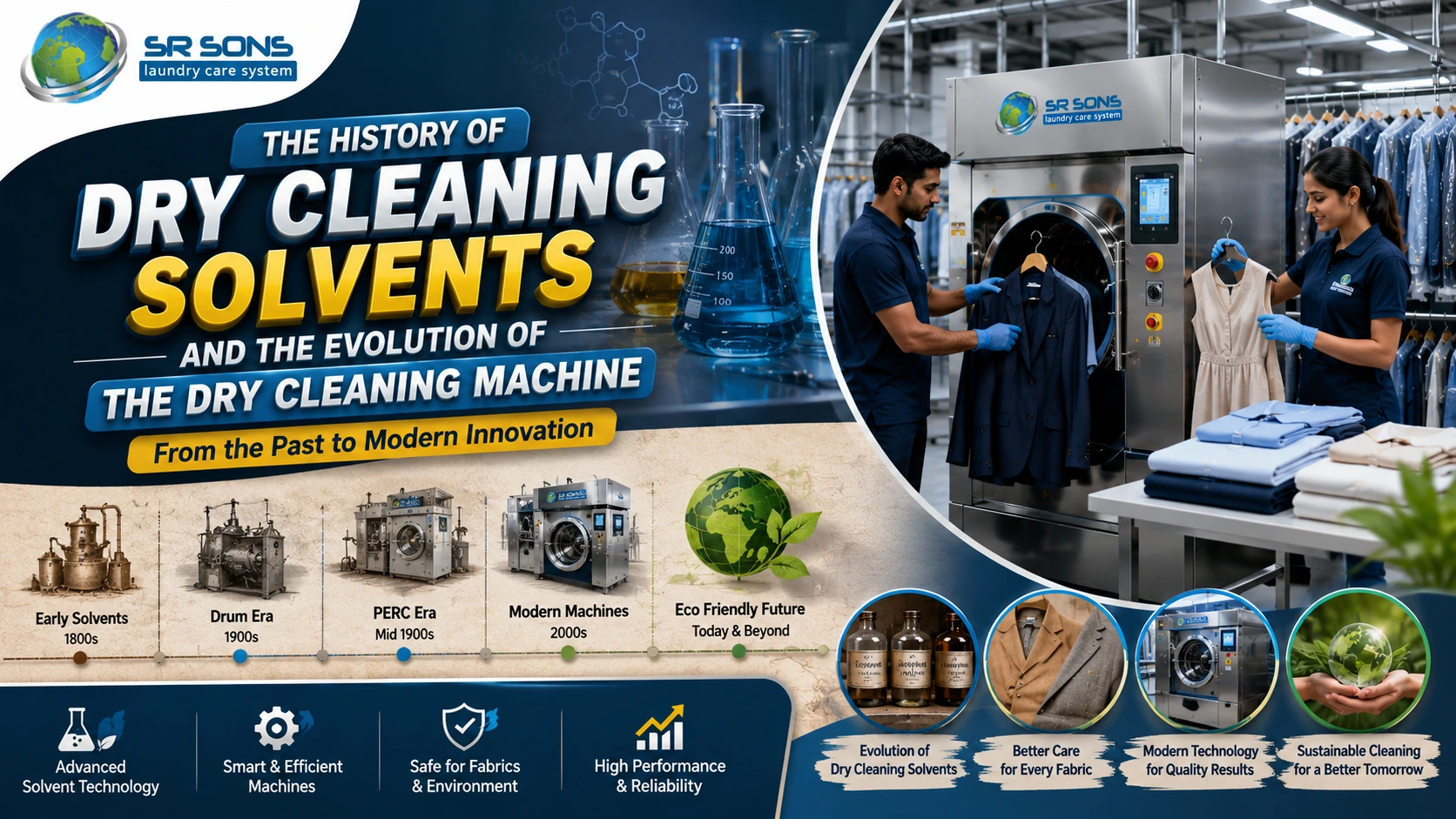
Major Milestones in the Evolution of Dry Cleaning Machines
The development of dry cleaning equipment reflects decades of engineering innovation.
Open Solvent Tanks
The earliest systems relied on manual soaking, making the process slow and unsafe.
Drum-Based Cleaning Machines
Rotating drums improved cleaning consistency and reduced manual labor.
Enclosed Cleaning Systems
Sealed machines prevented excessive solvent evaporation and improved workplace safety.
Automated Solvent Recovery
Recovery systems significantly reduced operating costs by recycling expensive solvents.
Computer-Controlled Machines
Modern equipment automatically adjusts cleaning cycles based on garment type, solvent temperature, moisture levels, and cycle duration.
Eco-Friendly Systems
The newest machines are designed to operate with environmentally responsible solvents while maintaining excellent cleaning performance.
Environmental Changes That Reshaped the Industry
Environmental awareness has transformed the dry cleaning industry over the past few decades.
Customers increasingly expect businesses to provide safer, cleaner, and more sustainable services.
Governments have also introduced regulations to reduce chemical emissions, improve worker safety, and encourage responsible solvent disposal.
As a result, manufacturers continue investing in:
- Closed-loop solvent systems
- Energy-efficient machines
- Reduced chemical emissions
- Improved filtration
- Solvent recycling technology
- Water-saving innovations
- Low-energy drying systems
These developments have made modern dry cleaning safer for operators, customers, and the environment.
How to Choose the Right Dry Cleaning Machine
Selecting the right machine involves much more than comparing prices.
Before investing, businesses should carefully evaluate:
- Daily garment volume
- Fabric types handled
- Solvent compatibility
- Automation level
- Energy efficiency
- Solvent recovery system
- Maintenance requirements
- Spare parts availability
- Operator safety features
- Environmental compliance
- Future business expansion
A machine that matches production requirements will reduce long-term operating costs while improving service quality.
Common Mistakes to Avoid
Many new laundry businesses make avoidable mistakes that increase expenses and reduce garment quality.
Some of the most common mistakes include:
- Using incorrect solvents
- Ignoring machine maintenance
- Overloading garments
- Poor stain identification
- Skipping pre-spotting
- Improper solvent filtration
- Delayed filter replacement
- Insufficient operator training
- Ignoring environmental regulations
- Choosing equipment based only on purchase price
Avoiding these issues leads to better customer satisfaction and longer machine life.
Technical Specification Comparison Table
| Specification | Modern Dry Cleaning Machine |
|---|---|
| Cleaning Method | Solvent-Based Cleaning |
| Working Principle | Closed Loop Solvent Circulation |
| Machine Type | Fully Automatic |
| Cleaning Medium | PERC, Hydrocarbon, Silicone, Modified Alcohol, Liquid CO₂ |
| Drum Material | Stainless Steel |
| Solvent Recovery | Automatic Distillation System |
| Filtration | Multi-Stage Filter System |
| Drying System | Integrated Heated Drying |
| Cooling System | Automatic Cooling Cycle |
| Control Panel | PLC / Digital Touch Control |
| Safety Features | Leak Detection, Emergency Stop, Door Lock |
| Energy Efficiency | High |
| Environmental Compliance | Low Emission Design |
| Industrial Applications | Hotels, Hospitals, Textile Units, Commercial Laundries |
| Maintenance Requirement | Low with Preventive Servicing |
The Future of Dry Cleaning
The future of garment care is focused on intelligent technology and environmental sustainability.
Artificial intelligence, automation, IoT-based monitoring, energy-efficient motors, and environmentally friendly solvents are shaping the next generation of dry cleaning equipment.
Manufacturers are developing machines that consume less energy, recycle more solvent, require less maintenance, and provide higher cleaning performance.
Businesses that adopt modern technologies will not only reduce operating costs but also meet growing customer expectations for sustainable cleaning solutions.
Frequently Asked Questions
Is dry cleaning completely dry?
No. Dry cleaning uses liquid cleaning solvents instead of water. The garments are cleaned in a solvent and then dried inside the machine before delivery.
Is PERC still used in dry cleaning?
Yes, PERC is still used in some countries and industries under strict environmental and safety regulations. However, many businesses are transitioning to greener alternatives.
Which solvent is considered environmentally friendly?
Hydrocarbon solvents, silicone-based solvents, modified alcohol solvents, and liquid carbon dioxide are generally regarded as more environmentally responsible alternatives compared to traditional PERC.
Can all fabrics be dry cleaned?
No. While many delicate fabrics such as wool, silk, velvet, rayon, and suits benefit from dry cleaning, care labels should always be checked before choosing a cleaning method.
How often should a commercial dry cleaning machine be serviced?
Routine cleaning should be performed daily, while preventive maintenance—including filter replacement, solvent inspection, pumps, seals, and mechanical components—should follow the manufacturer’s maintenance schedule.
Why is understanding the history of dry cleaning important?
Learning about the evolution of dry cleaning helps business owners understand why modern machines, advanced solvents, and environmentally responsible technologies have replaced older methods, enabling better investment decisions and improved garment care.
Conclusion
It is fascinating how all steps taken through history were directed at making one thing happen—to wash clothes delicately and safely, preserving their quality. From the accidental discovery of the first petroleum cleaning solution in France in the nineteenth century up to the intelligent, eco-friendly dry cleaning system nowadays, each step took place for the betterment of the process.
In S.R. Sons Garments Equipment, we understand that information has its own worth just like any technical innovation. We do not aim at talking about machines only—we want you to understand the essence of what goes on in today’s garment care. An educated client is able to select his equipment better and save money in the process while giving his customers better results.
As the laundry industry advances towards green solvents and advanced automation, companies that are aware of this and take advantage of innovations will find themselves better situated to perform high-quality laundry and protect clothes and the environment from harm.